Health and Safety Policy for Cleaners Brixton
 Cleaners Brixton is committed to maintaining a safe, healthy, and responsible working environment for every cleaner, supervisor, and client-facing team member. This policy sets out the principles that guide our cleaning services, helping to reduce risk, protect wellbeing, and support consistent standards during all domestic and commercial cleaning tasks.
Our approach to health and safety is built on prevention, awareness, and careful planning. Whether carrying out routine upkeep, deep cleaning, or specialist tasks, all staff are expected to work in a way that protects themselves, their colleagues, and the people using the premises. We aim to make safety a shared responsibility that is integrated into daily practice.
 The company recognises that professional cleaners may encounter a range of hazards, including wet floors, chemical products, manual handling, electrical equipment, and strained postures. To manage these risks, cleaning safety procedures are used consistently, and all workers are expected to follow instructions, report concerns, and pause work if conditions become unsafe.
Core Responsibilities
Management is responsible for providing a safe system of work, suitable equipment, and clear instructions for every job. This includes making sure that cleaners receive appropriate training, understand the safe use of cleaning materials, and are informed about any hazards that may be present in the work area. Supervisors should also monitor standards and make sure that protective measures are applied properly.
Cleaners must take reasonable care of their own safety and that of others. This includes wearing the correct personal protective equipment, using products as directed, keeping walkways clear, and avoiding rushed or unsafe actions. A strong safety culture depends on every individual behaving responsibly and communicating openly when problems arise.
Cleaning operatives are expected to read labels, follow dilution instructions, and use equipment only for its intended purpose. No one should use faulty tools, unstable steps, or containers without proper identification. The aim is to prevent avoidable incidents by encouraging careful, informed decision-making at all times.
Risk Control and Safe Working Practices
 Risk assessment is an essential part of our cleaning health and safety policy. Before work begins, supervisors or experienced staff should consider the site layout, the condition of surfaces, the presence of fragile items, and any likely exposure to harmful substances. Where necessary, tasks should be adjusted so that cleaning can be completed without unnecessary danger.
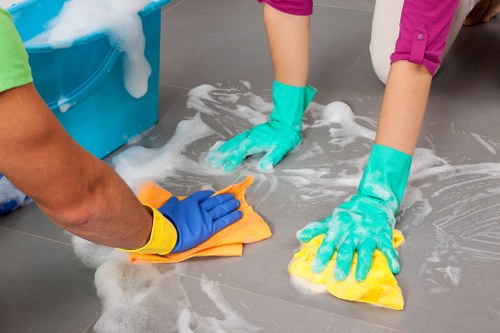
Slips, trips, and falls are among the most common risks in cleaning work. To reduce them, wet-floor areas should be clearly marked, cables kept tidy, and cleaning materials stored away from access routes. Staff should use appropriate footwear with good grip and should never leave floors wet without warning others.
Manual handling is another important concern. Lifting heavy bins, moving equipment, or carrying supplies may place strain on the back, shoulders, or wrists. Cleaners should use good posture, bend at the knees, avoid twisting, and ask for assistance when loads are awkward or too heavy. Where possible, equipment should be transported using trolleys or other suitable aids.
Use of Chemicals and Equipment
All cleaning products must be stored, handled, and applied carefully. Staff should never mix chemicals unless the product instructions specifically allow it, as dangerous fumes or reactions may occur. Safe cleaning practice means using the minimum amount needed, ventilating rooms where required, and ensuring bottles are clearly labelled and securely closed after use.
The correct equipment must be selected for each task and checked before use. Any damaged cords, loose fittings, cracked handles, or unreliable machinery should be reported immediately and taken out of service until repaired or replaced. Safe operation depends on regular inspection as well as good housekeeping and correct storage.
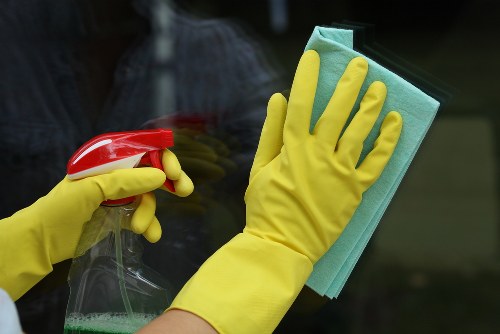
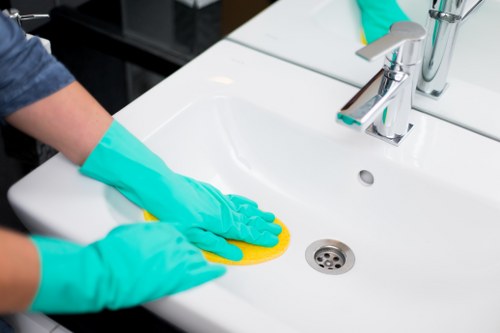
Personal protective equipment, including gloves, aprons, and eye protection where appropriate, should be worn whenever there is a risk of exposure to irritants, sharp edges, or splashes. PPE must be clean, in good condition, and suitable for the task. It should never be treated as a substitute for proper risk control.
Training, Reporting, and Emergency Response
Professional cleaners must receive training that is relevant to the work they perform. This includes product awareness, manual handling, safe lifting, fire awareness, emergency procedures, and the correct response to spills or accidents. Refresher training should be provided whenever risks change or new equipment is introduced.
All incidents, near misses, injuries, and unsafe conditions must be reported as soon as possible. Prompt reporting helps us identify patterns, correct weaknesses, and prevent similar events from happening again. Records should be kept in a way that supports review and continuous improvement.
If an emergency occurs, staff should stop work, protect themselves and others, and follow the agreed evacuation or response procedure. In situations involving hazardous exposure, serious injury, or fire risk, cleaners should seek assistance immediately and avoid actions that could increase danger.
Health, Welfare, and Wellbeing
 We believe that cleaning workforce safety includes both physical and mental wellbeing. Workers should not be expected to continue if they are unwell, excessively fatigued, or affected by stress in a way that could compromise safety. Breaks, hydration, and reasonable pacing of work are important parts of maintaining performance and reducing mistakes.
Where tasks involve repetitive movement, long periods of standing, or exposure to dust and cleaning agents, effort should be made to rotate duties and vary activities where practical. This helps to reduce strain and supports long-term fitness for work. Managers should remain alert to signs that a cleaner may need additional support or a temporary adjustment.
Respectful conduct is also part of health and safety. Bullying, harassment, or unreasonable pressure can affect concentration and increase the likelihood of incidents. A positive working environment supports safer behaviour and better outcomes for everyone involved.
Policy Review and Continuous Improvement
 This policy will be reviewed regularly to ensure it remains effective, practical, and aligned with the needs of our cleaning operations. Feedback from workplace inspections, incident reports, and staff observations will be used to strengthen procedures and improve day-to-day safety.
Cleaners Brixton is committed to raising standards through ongoing improvement rather than relying on fixed routines. By encouraging awareness, careful planning, and responsible behaviour, we aim to deliver a cleaning service that protects people, property, and peace of mind.
Every member of the team plays a role in upholding this commitment. Safety is not treated as a separate task, but as a core part of professional cleaning practice, supporting reliability, quality, and confidence in every job completed.